
Aerosense™ H1 Headset
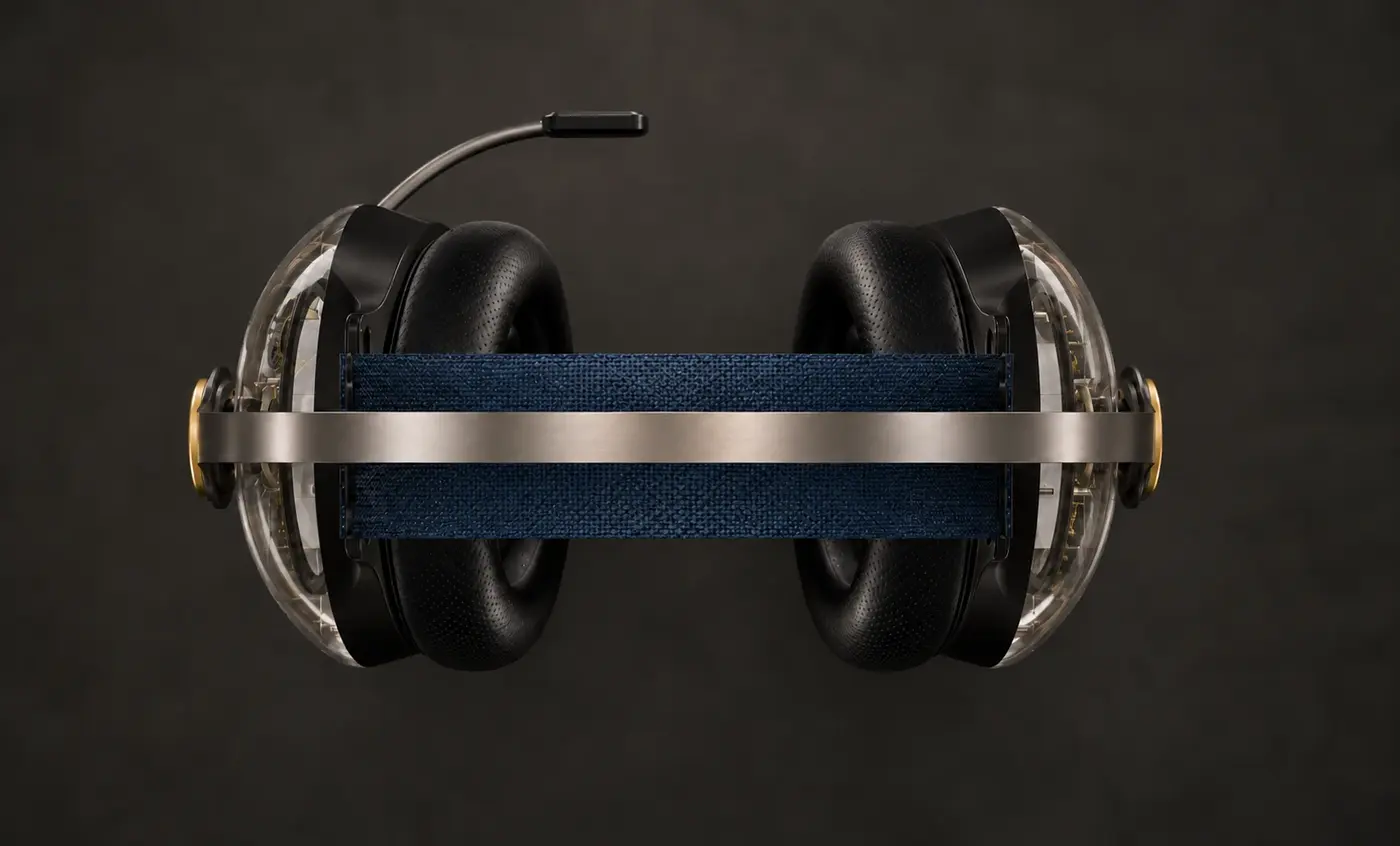
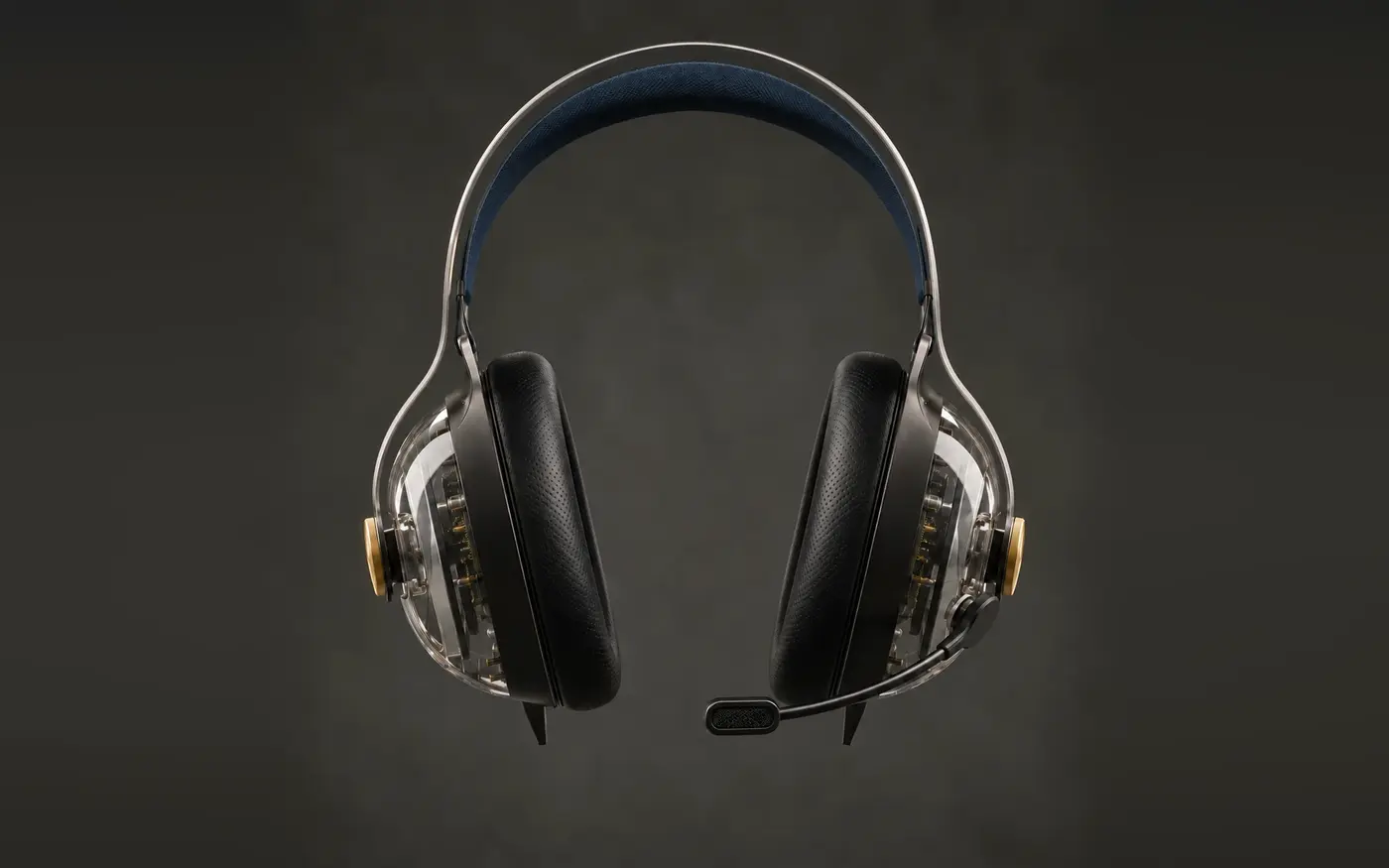
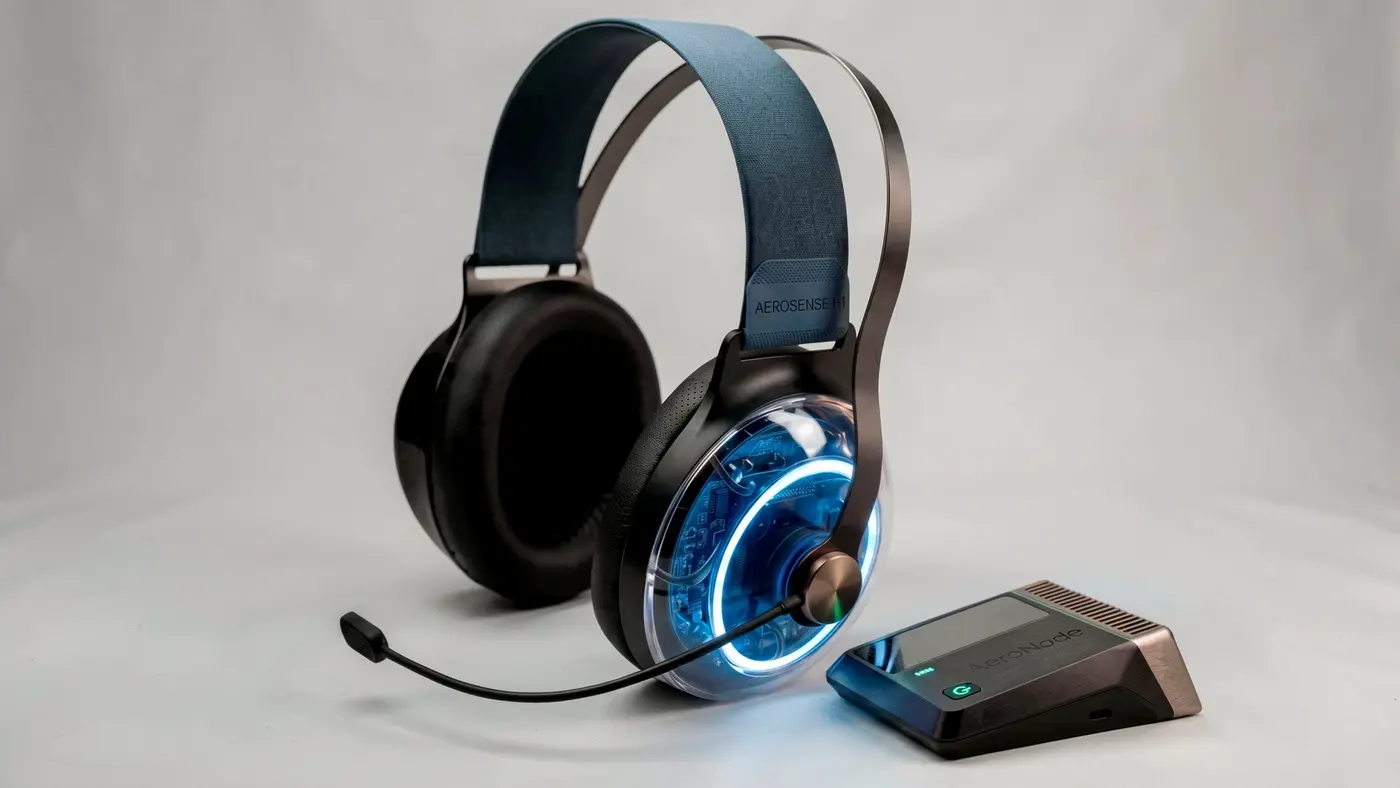
The flagship hardware platform. A premium aviation headset with Aerosense™ sensors, intelligence, and connectivity — built from the runway up for the modern aviator.

Aerosense™ Aviation
Aerosense™ is building the next-generation aviation headset and pilot safety ecosystem, driven by data — combining cutting-edge noise cancelling, biometric monitoring, personal black-box recording, aircraft and flight specific spatial audio, AI-powered voice computation, flight analytics and more — in a single wearable platform.
Noise Cancelling + DVNC™
The low-frequency rumble of a GA cockpit is what wears pilots down over a long flight. DVNC™ is our breakthrough approach to silencing it — a new layer of quiet that goes beyond anything conventional active noise cancelling can reach. It's made possible only by the fully integrated Aerosense™ system, which is why no standalone headset can match it.
Launching with the Aerosense™ H1. More to come soon.
Engineered in layers
Moving the heavy processing, and the heat it generates, into the AeroNode™ keeps both off the pilot's head, so the H1 is built around comfort rather than electronics. Modern lightweight materials, a full-length tension band that spreads the clamping force, ergonomically shaped earcups and an ultra-soft head strap add up to a radically different approach to how an aviation headset is designed and worn.
PilotSense™
On-the-ear sensors in the earcup cushions track heart rate, HRV and SpO2 in real time, while the AeroNode™ monitors cabin carbon monoxide (CO), flagging fatigue, stress, hypoxia and CO exposure with prioritised audio warnings. No extra wearables.
After every flight, AeroSync™ turns that data into a Cognitive Fatigue Index, a Flight Safety Score and an AI debrief in plain language: how close you came to the stall in the turn onto final, that the ball was out of centre on short final, and how to tighten your pattern next time. The H1 closes the loop on the most important instrument of all: the pilot.
VGSA™ · Vestibular Guidance via Spatial Audio
Spatial disorientation in IMC remains one of the leading causes of fatal accidents in general aviation. When the outside horizon disappears, the inner ear can no longer be trusted, and a pilot under pressure has to read, interpret and act on a panel of instruments.
VGSA™ takes a faster route. It wraps a three-dimensional binaural horizon around your head that shifts with pitch, roll and yaw. The brain processes spatial audio instinctively, far faster than an overloaded visual scan, prompting natural corrective inputs. An experimental, advisory emergency aid; never a replacement for instruments or training.
The headset is the one piece of equipment every pilot wears on every flight, yet the technology inside it has barely moved in thirty years. Aerosense™ is changing that, centring the cockpit on the pilot: fatigue, disorientation and cognitive load, not just hardware. And it watches the aircraft as closely as the pilot, tracking G-load, wing loading and stall margin in real time. Not just a headset, but a pilot safety and aircraft performance tool.
Listen · 6 min
The ecosystem

The flagship headset
Conventional headsets clamp from a single stiff pivot and spring, at one fixed force. The H1’s adjustable, full-length spring band spreads the force evenly and never touches your head; only an ultra-soft strap does. No hot spots or pressure points, even with a cap on.
Dual-wall earcups, two separate shells per side, seal around cap rims and sunglass arms. Inside: adaptive noise cancelling, PilotSense™ biometrics, Bluetooth multi-device and Creator Mode audio to your action camera.
Integrated sensors feed the AeroNode™, so the headset stays light while the system does the thinking.
Centralised processing hub
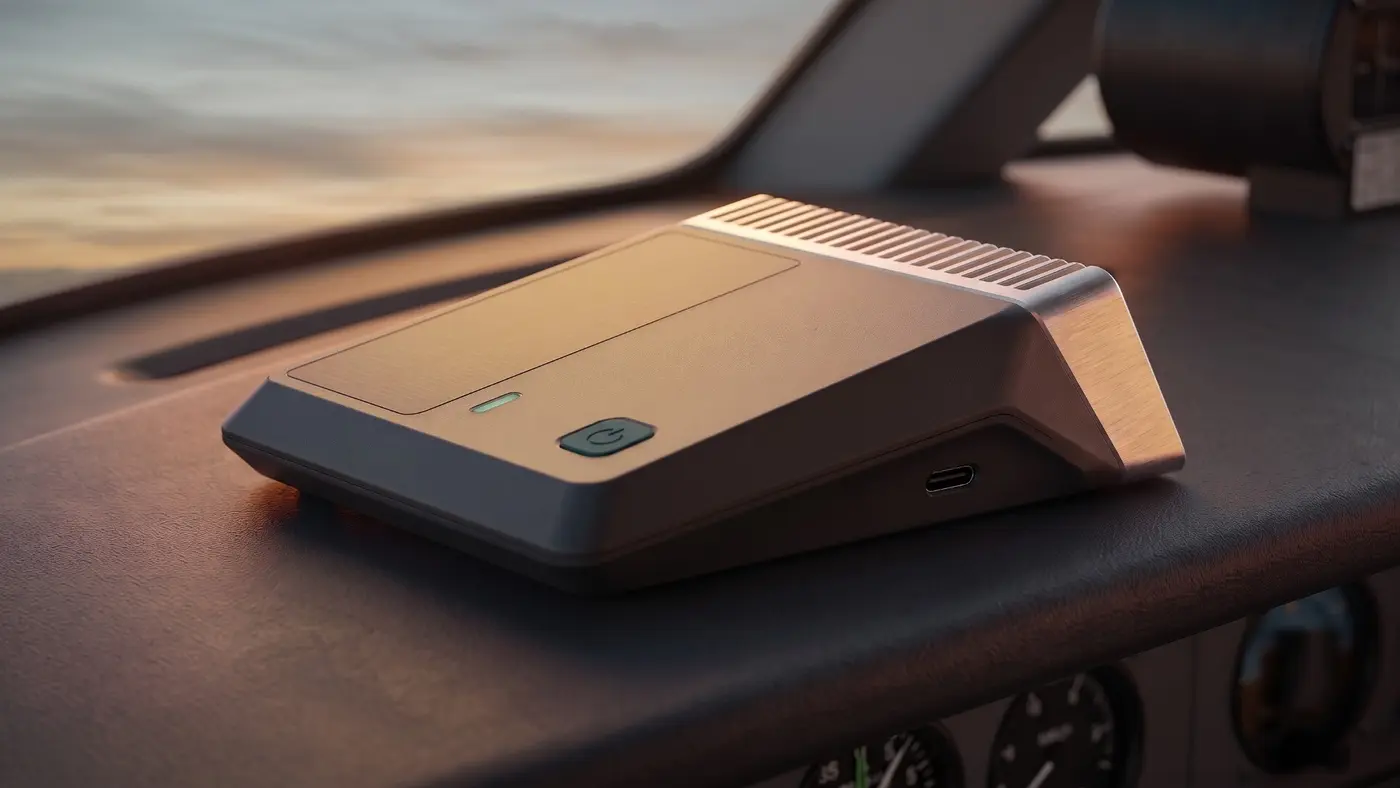
A standalone, metallic, crash-protected processing and power hub, held to the airframe by a quick-lock mounting pad, not bolts. The system's data-fusion centre, with its own calibrated high-rate IMU and GPS.
Where the heavy lifting happens: world-first, ground-breaking aviation technologies such as VGSA™ and DSMA™ run here, keeping the processing, weight and heat off the pilot's head.
Inside it, AeroVault™ acts as a personal black box: 20+ continuous flight and audio data streams on one timeline, with a trailing window encrypted into non-volatile memory on a high-G event.
The Aerosense™ H1
Aviation headsets haven't meaningfully evolved in decades. The Aerosense™ H1 is the world's first aviation headset built as a complete safety platform, combining premium hardware with a deep safety and data analytics ecosystem across eight proprietary technologies, with three patents already pending, designed to scale.
The flagship hardware platform. A premium aviation headset with Aerosense™ sensors, intelligence, and connectivity — built from the runway up for the modern aviator.

Contextual data processing and delivery of aircraft attitude, speed, vibration, g-force, GPS, audio, pilot biometrics and more, all turned into AI-powered flight debriefs.

On-the-ear heart rate, HRV, SpO2, fatigue detection, hypoxia early warning, carbon monoxide detection — no external wearables required.

Conventional noise cancelling stops at the surface. DVNC™ goes after the deep, fatiguing engine and propeller rumble that every other headset leaves behind — for a calm that has to be heard to be believed.

Aviation's first vestibular guidance via spatial audio: an experimental, advisory aid to help pilots keep their orientation in inadvertent IMC, one of the leading causes of fatal GA accidents.

Using advanced sensor fusion and aerodynamic modelling, DSMA™ continuously predicts your ACTUAL stall speed and warns you long before you reach it.

Cockpit audio & data recording with a crash-protected, G-force-triggered memory capsule. Your own encrypted flight archive.

The companion intelligence platform — real-time dashboards, post-flight debrief, AI fatigue scoring, fleet management, and full ecosystem visibility in one place.

Neural voice reconstruction technology that treats a pilot's speech as data rather than sound, to rebuild a clean, studio-quality version of their own voice in real time.
Layer 1
Fast market entry with the Aerosense™ H1, a premium headset for private pilots, flight schools, bush and helicopter pilots, commercial operators and aviation content creators, in a $1.2B aviation headset market growing 8–12% a year.
Layer 2
Every flight adds to a dataset no one else has: aircraft motion, engine and flight data, cockpit audio and pilot biometrics on one timeline, across every aircraft type the system flies in. That data powers the Bio-Audio Fusion Engine™, VGSA™, DSMA™ and fleet intelligence, and it grows more valuable with every hour flown.
AeroSync™
Like having a safety pilot on every flight: an audio cue in the air when it matters, the full detail once you’re back on the ground.
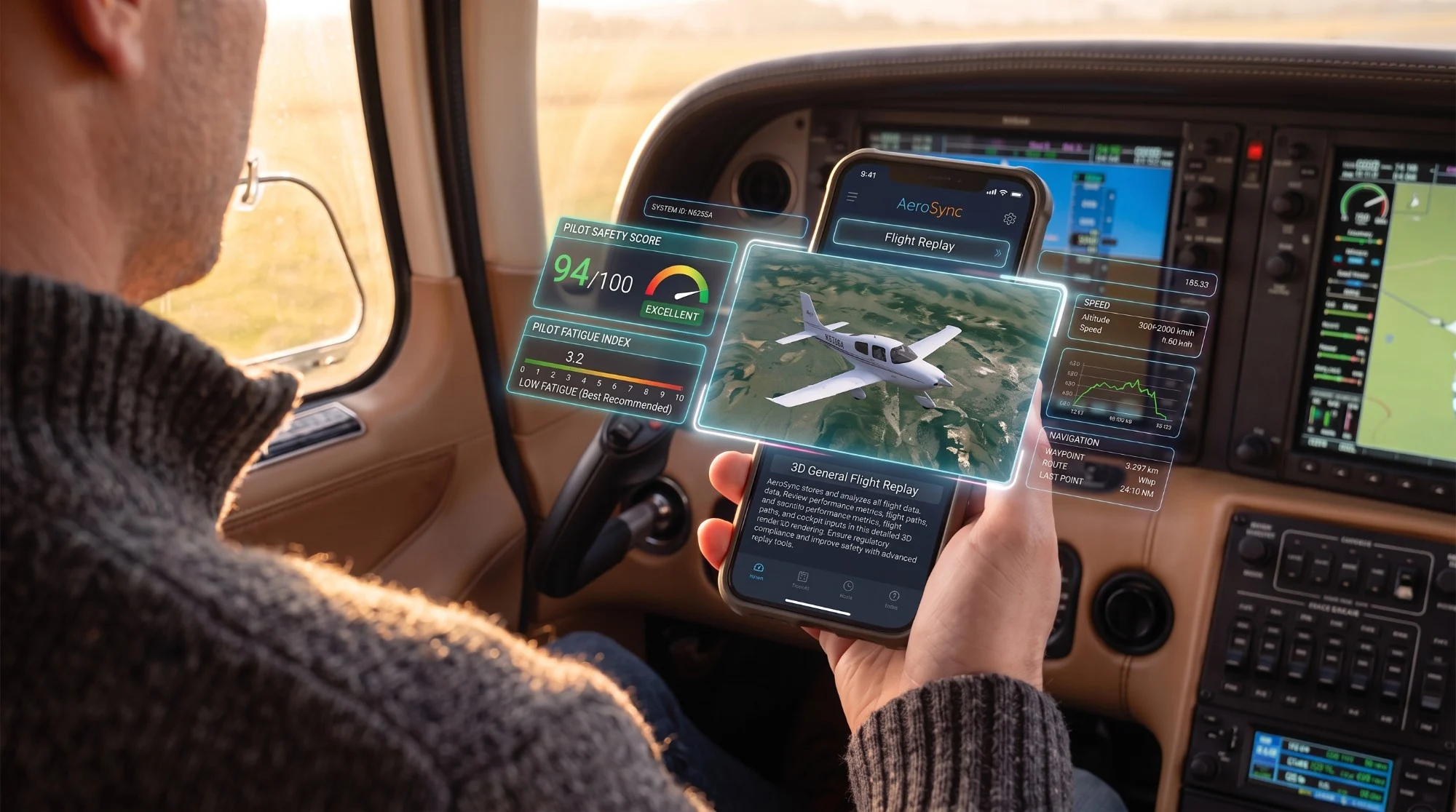
In the air, you get a soft audio cue only when something critical needs your attention. On the ground, AeroSync™ rebuilds the whole flight in 3D from AeroNode™ data, synced with cockpit audio and your biometrics, and debriefs you in detail. A separate mode analyses aerobatic displays, figure by figure.
Because the AeroNode™ tracks the aircraft itself, every debrief covers how it was flown: coordination in the turns, each leg of the traffic pattern, your closest margin to the stall, steep bank angles and erratic handling. Pilots and instructors get clear, specific feedback after every flight, and a record of progress over time, to fly it safer next time.
Platform capabilities
Beyond the headline features, the H1 platform carries a dense layer of proprietary intelligence.
IMU vibration sensing detects engine start and shutdown automatically, for flight-phase awareness without pilot input.
Takeoff, cruise, descent, landing and the phases between are identified in real time through multi-sensor fusion.
Contextual cues from pilot speech refine DSMA™, VGSA™ and other algorithms in real time, with no interaction required.
The system learns an aircraft's nominal vibration signature and flags abnormal engine or propeller events.
Move the H1 between airframes and it identifies the aircraft and loads the right profile.
G-force thresholds and sensor fusion log hard landings and structural red-flag events with a timestamp for maintenance review.
Powers on and off when worn or removed, using biometric presence detection. No switches.
Interchangeable cable modules for GA dual-plug, helicopter, LEMO and other aviation interfaces on one headset.
Pilot and passenger H1 headsets can talk wirelessly, bypassing the aircraft audio panel when needed.
Fixed-wing, rotary-wing and broader general aviation, with optimisations for each aircraft type.
Post-flight summaries with a full event timeline, red-flag moments, audio segments and key performance metrics.
Motion sensing watches for sustained uncommanded banking consistent with spiral onset, and gives the pilot an advisory alert.
Aerodynamic buffet onset is identified through sensor fusion as an advisory early warning.
An automated sweep builds an independent EQ and filter set for each ear, so left and right are balanced for VGSA™ spatial audio cues.
Flight schools monitor fleet activity, review student sessions and manage aircraft assignments centrally.
Flight time, aircraft, phase events and key data are logged automatically for pilot and aircraft.
Go-to-market
Two deliberate stages inside one 18-month engineering arc: early revenue, real-world pilot data, and an H1 launch with a community already waiting.
The entry point to the ecosystem: the AeroNode™ core paired with the AeroSync™ app. No headset, no audio path, no biometrics.
The full launch: every layer of the platform in a single wearable. Headset, hub and app, working as one system.
Safety first
Aerosense™ safety technologies are experimental and advisory. They augment pilot awareness; they do not replace certified avionics or pilot training. The system is a portable electronic device with zero input to the aircraft or flight controls, and if everything else fails, the H1 still works as a full aviation audio headset.
Where we are now
This isn't a deck and a dream. Aerosense™ has an engineering team, a full lab, its own aircraft, and development hardware and software that is already flying and logging real data. Provisional patents are filed, and we are moving fast.
Embedded hardware, software and audio DSP engineers, building on development prototypes and real flight data every day.
An in-house lab for electronics, acoustics and bench testing, so ideas move quickly from the bench to the aircraft.
We own our own helicopter and fixed-wing aircraft, with real-world test environments at our own airfield.
Development hardware and software are already in the air, capturing real flight, audio and vibration data.
Meet the team
Founder & CEO
Aerosense™ Aviation
Duran is a multi-rated fixed-wing and helicopter pilot with 15 years in aerospace R&D, manufacturing and global sales. He founded SteadiDrone, built it into ALTI Unmanned with zero external capital, and led it to a major acquisition in 2021.
He started Aerosense™ after seeing a gap from the cockpit: no truly integrated, human-centric layer of intelligence on the flight deck. He leads the company's vision, product strategy, core engineering and investor relations, and is the company's test pilot. His recognition includes Forbes 30 Under 30, Destiny Man Top 40 Under 40, and a range of other business and aerospace awards.
Lead Audio DSP
Aerosense™ Aviation
John holds a PhD and two master's degrees in the audio and signal-processing disciplines the H1 is built on. He engineered audio for Rockstar Games on the Grand Theft Auto franchise, and led DSP at Neural DSP, whose amp-modelling technology sets the standard in professional guitar audio.
At Aerosense™ he leads the H1's audio chain: adaptive noise cancelling, DVNC™ and PureVoice™.
Principal Electronics Engineer
Embedded Systems Engineer
Product Design Engineer
Investors
Interested in what we are building? We would love to tell you more. Request our investor deck and we will be in touch.
Opens an email to our founder.
Contact
Pilots, flight schools, partners and press: we'd like to hear from you.